Sexuality
What is sex?
A seemingly simple question, but one that is actually quite complex. Different cultures, generations, and even individuals understand the term differently. That is why it is helpful to first establish a common basis for talking about sexuality. More information on talking about sexuality can be found under the section Sexuality & Language.
Definition of sexuality
"A central aspect of being human throughout life encompasses sex, gender identities and roles, sexual orientation, eroticism, pleasure, intimacy and reproduction. Sexuality is experienced and expressed in thoughts, fantasies, desires, beliefs, attitudes, values, behaviours, practices, roles and relationships. While sexuality can include all of these dimensions, not all of them are always experienced or expressed. Sexuality is influenced by the interaction of biological, psychological, social, economic, political, cultural, legal, historical, religious and spiritual factors.“
This means:
- Sexuality is a part of us, throughout our entire lives
- It includes the body, feelings, desire, and relationships
- It encompasses gender and gender identity, sexual orientation, intimacy, closeness, and eroticism
- Sexuality manifests itself in thoughts, desires, and actions
- It is individual and changes over time
- It is influenced by personal, social, and societal factors
But what exactly does that look like?
Biological
During puberty, a person experiences physical changes (e.g., menstruation, erection) and begins to feel sexual desire even without having had sexual contacts.
Orientation and desire
Someone in their mid-40s suddenly realizes that they are emotionally and sexually attracted to colleagues of the same sex, even though they had previously only had heterosexual relationships.
Values and attitudes
Someone rejects casual dating because commitment and emotional closeness are important to them, but at the same time advocates that other people live out their sexuality more freely.
Life span
An elderly woman in a nursing home enjoys touch, tenderness, and flirting with a person she trusts, even though she no longer wants penetrative sexual contact for health reasons. You can find more information on sexuality and age(ing) under the topic of life stages.
Economic and political factors
A single parent has little time, money, or privacy. Sexuality mainly takes place in the form of fantasies, online, or occasional masturbation because structural conditions make intimate relationships difficult.
Identity and gender role
A non-binary person realizes that the expectations of being “typically male” or “typically female” do not fit and seeks a lifestyle in which this identity can be expressed in clothing, language, and relationships.
Thoughts and fantasies
A person has vivid erotic fantasies, masturbates regularly, but is not currently in a relationship. Sexuality therefore only takes place in their internal experience.
Practices and relationships
A couple who have been together for many years and have children together have less sex than they used to, but enjoy intense physical closeness, tenderness, conversations about needs, and shared rituals.
Social influence
A young woman hides her lesbian orientation because her family is very religious and rejects homosexuality. She feels how norms, rights, and religion shape her sexual self-perception.
Sex: more than an act
When we talk about sex, the question arises: What acts are included? From kissing to penetration, not everyone sees it the same way. Studies show that people have different opinions on whether oral sex or intense kissing count as “sex”.
Time for Reflection
What is sex to you?
Take a moment to think about which acts are part of sex for you and which are not.
Does this have any significance to you?
Perhaps you could discuss this with others.
Do your definitions differ?
Penetration
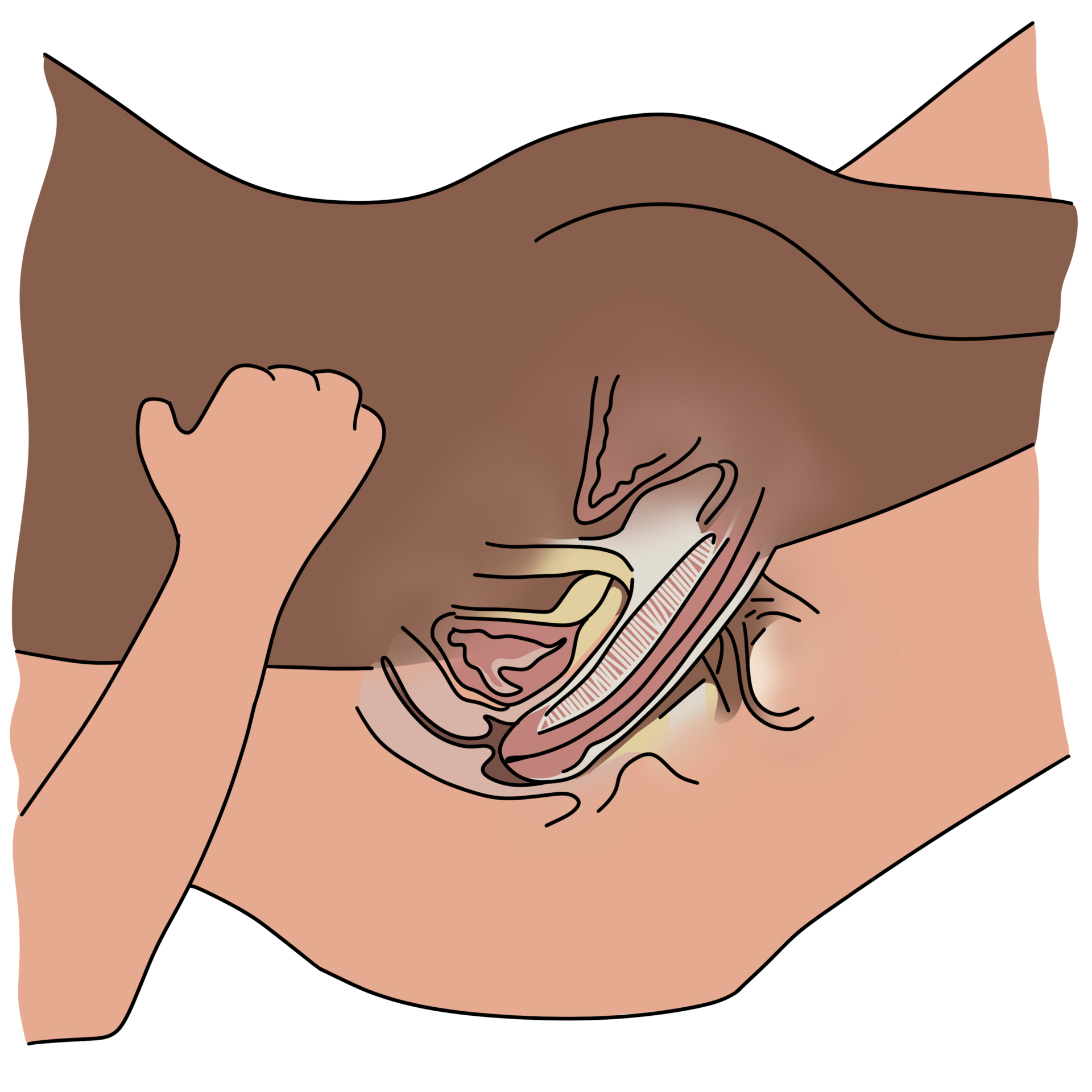
Definition
Penetrative sex involves the insertion of a body part (usually the penis, a finger, or a hand) or an object (such as a dildo or anal plug) into a body orifice (vagina, anus, or mouth) of another person
Fellatio

Defintion
Fellatio, or oral sex performed on the penis, refers to the oral stimulation of the penis using the mouth, lips, or tongue. In slang terms, fellatio is also referred to as “blowing” or a “blowjob,” which can be misleading, as the penis—and especially the glans—is typically licked, sucked, or kissed. Hand movements are often used for additional stimulation. Ejaculation can occur in the mouth or elsewhere.
Important: To protect against STIs, a condom should also be used during fellatio. You can find more information on this under the topic STIs.
Cunnilingus

Definition
Cunnilingus, or oral sex performed on the vulva, is a form of oral sex in which the vulva (clitoris, labia, vaginal opening) is stimulated with the tongue and lips. In slang, cunnilingus is sometimes described as “licking,” which can be misleading, as sucking or nibbling may also be involved.
Solo sex

Definition
Solo sex, also known as masturbation or pleasuring oneself, refers to the active stimulation of your own genitals for sexual satisfaction. There are many different methods for this. Some use their hands and fingers, while others prefer sex toys or practices involving other objects (such as rubbing against a pillow). You can find more information on this under the topic of masturbation.
Orgasm: Not the only goal
Having an orgasm is often considered the pinnacle of sexuality. Studies show that many people experience satisfying sex without orgasm and that focusing on it can even create pressure. In one study, 28% of women and 7% of men said that they don't always climax, but are still very satisfied. The deciding factors are mood, atmosphere, and emotional connection.
Experts emphasize that sex is not just about “release,” but about the quality of the encounter, with preferences such as long foreplay, kissing, or tantra techniques being experienced, oftentimes, as more fulfilling than orgasm itself.
Focusing on moods and preferences
Moods influence desire more than orgasms, for example. A study on sexual motivation found that positive states of mind (e.g., relaxation or playfulness) can double the intensity of desire and intimacy, while stress or pressure to perform can block orgasms. Individual preferences vary enormously. While some prefer sensory stimulation (e.g., feather touches), others prefer emotional depth or BDSM practices. Research shows that couples who openly share their preferences report having great sex 50% more often, regardless of orgasm. The focus is then on discovery and enjoyment, and the journey is more important than the destination.
Intimacy in relationships
Intimacy describes the deep emotional and physical connection that can enrich sexuality, often through mutual trust and openness. Studies show that couples who talk regularly about their desires and share affection are more satisfied in the long term. About 70% of respondents in a study from Germany report that emotional closeness increases satisfaction, regardless of the frequency of sexual intercourse. Self-love seems to play an important role here: those who accept their own bodies are more open to vulnerable moments such as cuddling or eye contact, which deepens intimacy.
Lust and enjoyment
Lust originates as physical and emotional arousal, often paired with playful fun that keeps sexuality alive. Research in sexual psychology emphasizes that humor and novelty (e.g., through positions or role-playing) can increase arousal by up to 40% because they release the happiness hormone dopamine and reduce inhibitions. Especially when lust isn't just focused on the genitals, but includes the whole body, the experience becomes enjoyable. This can be achieved through massage, for example, which studies have shown to be linked to satisfaction in relationships.
Desire and solo sex
Desire is the inner force of attraction that is triggered by things like fantasies, smells, or touch, and doesn't always lead to immediate action. A study of women with strong sexual desire found that 60% of it arises from solo sex and masturbation, which boosts their self-confidence and also promotes desire in partnerships.
Sex positivity
Sexuality is part of life. It can be exciting, tender, everyday, experimental, or calm.
A sex-positive attitude fundamentally views sexuality as something natural and potentially enriching, regardless of whether someone has a lot, a little, or no sex at all.
People experience their sexuality in very individual ways, that are impossible to count, and it would be equally impossible to list every sexual practice.
It is important to approach your own sexuality and that of others in a fundamentally positive and non-judgmental way and not to engage in kink shaming.
Being sex-positive means:
Each person decides for themselves whether, when, and how they live out their sexuality or not.
Diversity is valuable: different orientations, identities, and practices deserve recognition.
Lust, respect, and consent are at the core.
... having to approve of everything. Instead, it means talking openly about sexuality without feelings of guilt or shame, sharing knowledge, and promoting personal autonomy.
As a theoretical concept, sex positivity can be divided into eight dimensions
Sexuality enhances well-being and happiness.
Individual sexuality is unique and multifaceted.
Knowledge about sexuality can take many forms (scientific, experiential, cultural).
Professional ethics play a role (e.g., respect, confidentiality).
Honest, open communication is at the core.
Sexuality is humanizing—it makes us experience ourselves as human beings.
Positive sexuality can promote peacemaking (e.g., through mutual respect).
It is applicable at all levels of society – from individual relationships to political structures.