Circumcision of the Penis & Vulva
Circumcision involves the removal of parts of the genitals. Circumcision is a topic that is often discussed, as it affects millions of people worldwide. The decision or necessity to undergo circumcision can have very different reasons: cultural, religious, medical, or even cosmetic.
Penile circumcision
Penile circumcision is the removal of the foreskin. It is performed worldwide for various reasons
Medical reasons
Sometimes circumcision is necessary if the foreskin causes problems such as phimosis (narrowing of the foreskin). Foreskin narrowing increases the risk of infection for people with penises. This can be accompanied by pain when peeing (urinating) or during erections.
Hygiene & Prevention
There is evidence that circumcision can reduce the risk of certain infections. For example, people with a circumcised penis suffer significantly less from urinary tract infections
The procedure can be performed on children or adults. In the case of children, the parents can decide as long as the child's welfare is not harmed. In debates about male circumcision, procedures that are not medically necessary are sometimes criticized because they are performed without the child’s consent. You can read more about this in this article in the Deutsches Ärzteblatt. Once children understand what the procedure entails, they must be involved in the decision. This is usually the case from around the age of 14. From the age of 18, each person can decide for themselves. Circumcision is generally safe, but like any surgical procedure, it carries risks such as pain, infection, or bleeding. There are higher risks if the circumcision is not performed by medical personnel. If, for example, the foreskin is not completely removed, a second procedure may be necessary. In addition, heavy bleeding or infections may occur. A lack of follow-up care delays the healing process and may necessitate further operations
It is, therefore, important to have circumcision performed by experts under hygienic conditions. This helps to ensure that the procedure can be carried out without any major complications.
Psychological effects
Psychological consequences range from having no impact to causing trauma. Non-medical, non-consensual procedures performed on children without anesthesia and without the opportunity to process the experience appear to be particularly high-risk.
It is therefore important that circumcision is performed by experts under hygienic conditions.
Effects on sexuality
After undergoing circumcision, it is generally possible to resume sexual activity after approximately three weeks. Some circumsized individuals report changes in their orgasms afterwards. Most studies find no adverse effects on libido, erection, orgasm, penile sensitivity, or sexual satisfaction as a result of penile circumcision.
Vulva circumcision (genital mutilation)
In contrast to circumcision of the penis, circumcision of the vulva is generally known as female genital mutilation or female genital cutting (FGM/C). This involves removing or altering parts of the external genitals of girls or women
In some communities, FGM/C is an ancient tradition. No global religion supports FGM/C.
The consequences can be severe: severe pain, infections, complications during pregnancy and childbirth, and often long-term sexual problems. FGM/C is prohibited in many countries.
-
-
Find out more about FGM/C here
to website -

-
Find out more about FGM/C here
-
-
If you are impacted and need advice, this is one place to turn to.
Saida Beratungsstelle -

-
If you are impacted and need advice, this is one place to turn to.
-
-
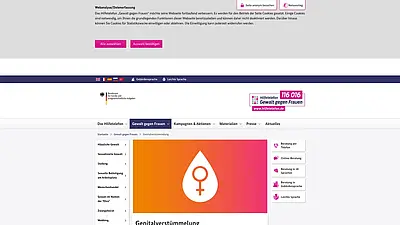
If you are in acute danger, the helpline “Gewalt gegen Frauen" (Violence Against Women) can help
to website Hilfetelefon -
-
If you are in acute danger, the helpline “Gewalt gegen Frauen" (Violence Against Women) can help
It's worth talking openly about it
Talking about circumcision is important, whether you are affected yourself, have children, or are simply curious. Open discussions help to dispel myths, understand risks, and make informed decisions.