Menstruation & The Menstrual Cycle
Periods are part of life for many people with uteruses. TThey are not embarrassing or disgusting, but rather a completely natural process. Nevertheless, they are often concealed or even portrayed in a negative light
Time for Reflection
For menstruating people: How well do you know your cycle?
How long does your cycle last on average?
Is your cycle regular?
How do your cycle and period make you feel?
What menstrual products have you tried? Which ones work best for you?
What do you know about your friends' cycles?
Time for Reflection
For non-menstruating people: What do you know about periods and menstrual cycles?
How long does a cycle last on average?
How much blood does someone lose during their period?
Can you pee with a tampon?
Do you have period products at home that your friends can use?
Can someone get pregnant during their period?
What is menstruation?
Menstruation, also known as a “period,” is part of the menstrual cycle. The cycle prepares the body for a possible pregnancy every month.
Important: There is no such thing as a “perfect” cycle. Every body is different. Cycles can be longer or shorter, stronger or weaker, and change over the course of a woman's life. The menstrual cycle is also influenced by external factors such as diet, stress, exercise, illness, etc.
The phases of the cycle
On average, a cycle lasts about 28 days. A few days more or less? That's totally fine and normal.
Anything between 24 and 38 days is considered normal.
Menstrual phase (approx. days 1–4)
The uterine lining is shed, accompanied by bleeding. To shed the uterine lining, the uterus contracts, which can lead to cramps. On average, 4–12 teaspoons of blood are lost
Proliferative phase (approx. days 5–14)
Under the influence of estrogen, the uterine lining rebuilds itself. At the same time, ovarian follicles mature. One follicle completes maturation and passes its egg into the fallopian tube during ovulation. Some women feel ovulation as a tugging pain.
Good to know: An egg can only be fertilized for 24 hours. However, sperm can survive for up to 7 days, so sex before and shortly after ovulation can also potentially lead to pregnancy.
Luteal phase (approx. day 15–28)
The follicle is converted into the corpus luteum, which produces progesterone. This hormone prepares the uterus for a possible pregnancy by changing the uterine lining so that a fertilized egg can implant itself. Breasts may feel tender as the mammary glands expand. If no egg is fertilized, progesterone levels drop again and the next menstrual period begins.
The “male” cycle
People with higher testosterone levels also have a cycle, but it is much shorter: one day. This can influence the mood and behavior of people with male hormones:
Testosterone peaks after waking up = energy
Decreases throughout the day = more calm
In the evening, oxytocin, the “love hormone” or “cuddle chemical,” takes over. If testosterone is not stimulated by alcohol, sex, or exercise, fatigue sets in.
Testosterone is replenished during sleep. A 24-hour rhythm, in other words.
Who can menstruate?
It's not just women who menstruate. Trans*, intersex, and non-binary people can also have periods—anyone who lives with a uterus and ovaries. The first bleeding during puberty is called menarche, and the end of menstrual cycles, usually following several years of transition (perimenopause), is called menopause.
How does menstruation feel?
It varies a lot. Typical symptoms of menstruation are:
It often helps to rest, apply heat (e.g., with a hot water bottle), or take painkillers—preferably after consulting a medical professional.
PMS (premenstrual syndrome)
Some people also experience PMS (premenstrual syndrome). PMS describes the physical and emotional symptoms that occur before your period:
Irritability or mood swings
Feelings of sadness or anxiety
Severe fatigue
Headaches or joint pain
Cravings or changes in appetite
Sleep problems
Bloating or gassiness/ flatulence
There are ways to alleviate the symptoms – for example, with exercise, relaxation, a healthy diet, or medication. If you would like to learn more about how menstrual symptoms can be treated, talk to your doctor. You can get an initial overview here.
Period products – your choice
There are many ways to deal with blood. Everything has advantages and disadvantages. Ultimately, you decide what is right for you.
Tampons
Information
absorb blood in the vagina. Some people experience vaginal dryness when using tampons. In this case, it is best to switch to another product or moisten the tampon.
Menstrual cups/discs
Information
are folded and inserted into the vagina, collect blood in the hollow of the cup, are reusable and sustainable.
Period underwear
Information
absorbs blood directly into the fabric, like normal underwear.
Sanitary pads & panty liners
Information
disposable or washable, simply stick them in your underwear.
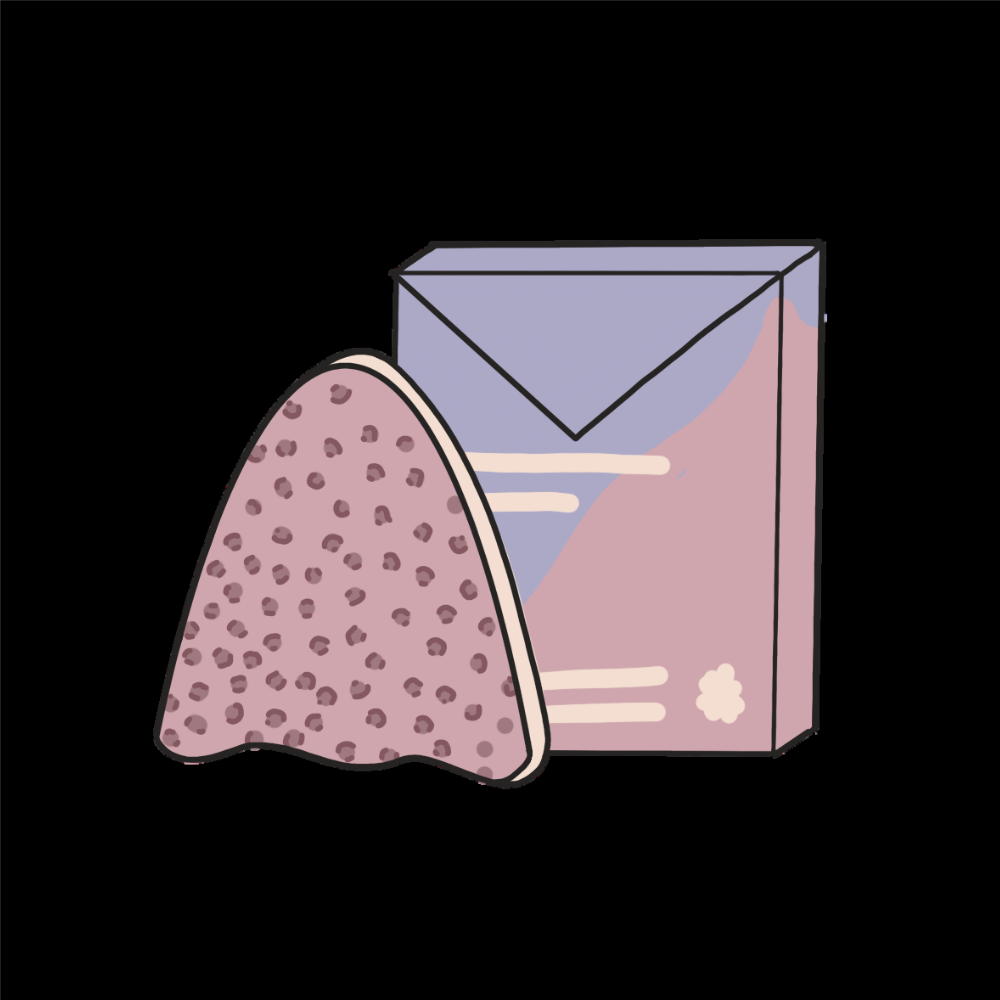
Period sponges & soft tampons
Information
similar to tampons but soft and can even be worn during sex.
Free Bleeding
Information
takes some practice, consciously letting the blood flow and going to the toilet when necessary.
Important: change or empty regularly to avoid infections.
Period poverty
Period poverty means that menstruating people do not have sufficient access to hygiene or period products. There can be many reasons for this.
According to a study, a quarter of women in Germany find that period products are a financial burden. Over 10% even say that they delay changing tampons or pads in order to make the products last longer
One solution is to provide menstrual products free of charge in public institutions such as schools, universities, government offices, or social centers. Some cities in Germany are already successfully implementing this.
Another important step is tax relief: Until 2020, tampons and pads were considered “luxury goods” for tax purposes in Germany and were subject to 19% VAT. After considerable public pressure, the rate was reduced to 7%, sending a strong signal that menstruation is not a luxury, but part of everyday life.
Menstruation and sexuality
Sex during your period? Absolutely possible, if everyone involved wants to.
Desire can increase or decrease during menstruation, both of which are normal.
Sex is not “dirty.” If you want, you can put a towel underneath or go in the shower.
There are special soft tampons that absorb blood and can be worn during sex. Normal tampons should be removed beforehand.
Safe sex remains important. During menstruation, the risk of HIV infection through vaginal intercourse rises
Condoms protect against pregnancy, also during menstruation. Although menstruation is not one of the fertile days, sperm can survive in the body for several days. An egg can therefore be fertilized even after menstruation
Why are we talking about this?
Because menstruation is still far too often taboo. Advertisements show blue liquid instead of blood, as if real menstrual blood were “too much.” This makes something that is completely normal invisible and contributes to discrimination against menstruating people.
This leads to complaints not being taken seriously and people feeling ashamed of their period, something that is completely natural. 35% of menstruating people say they feel “unclean” during their period
Your body is not dirty, it is nothing to be ashamed of. And only by talking about it can we break the taboo and end discrimination associated with menstruation.